Sea Nettle (Chrysaora) care guide
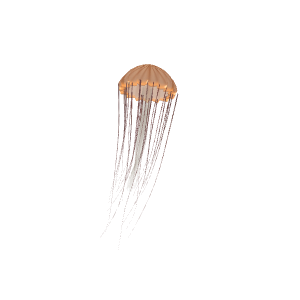
Chrysaora fuscescens / C. chesapeakei · Pelagiidae
Sea Nettle (Chrysaora fuscescens / C. chesapeakei) is an aquarium animal. It belongs to the Pelagiidae family. It is native to C. fuscescens: northeastern Pacific coast, southern British Columbia to Baja California. C. chesapeakei: Chesapeake Bay and other bays and estuaries of the US Atlantic coast.. Water temperature: 10°C – 14°C (Pacific, chiller required); 21°C – 25°C (bay nettle). pH: 8.0 – 8.4. Care difficulty: Advanced.
How do you care for Sea Nettle (Chrysaora)?
| Light | No photosynthetic partners, so no special light need; ordinary white light with a dark period. The Pacific nettle shows stress when lit 24 h a day. |
|---|---|
| Temperature | 10°C – 14°C (Pacific, chiller required); 21°C – 25°C (bay nettle) |
| pH | 8.0 – 8.4 |
| Placement | Kreisel, pseudokreisel or stretch kreisel: smooth bare walls, gentle circular flow, no bubbles, no corners. Stock sparingly, a few animals of matched size. Salinity: Pacific 28–35 ppt, bay nettle 18–33 ppt. |
| Growth | Pacific: wild bells 19–35 cm (to about 45 cm), 24 tentacles. Bay nettle: bell about 10–12 cm, living about 6–12 months on display. |
| Difficulty | Advanced (the Pacific nettle is a public-aquarium animal; the bay nettle is easier but still advanced) |
| Family | Pelagiidae |
How do you trim and propagate Sea Nettle (Chrysaora)?
Water changes about weekly; wipe walls often and bleach-sanitise periodically; remove hydroids and polyps from tank and plumbing. Feed enriched Artemia nauplii at least twice daily, plus gelatinous prey (diced moon jelly, comb jellies) and krill, fish or clam once or twice a week. Breeding: polyps culture well and strobilate (warming, for Pacific) to release ephyrae; bay nettles need new polyp-to-display cycles every 3–6 months.
What problems affect Sea Nettle (Chrysaora)?
Bell curls inward: irritation from fouling hydroids or polyps, or other jelly species sharing the water. Tangled oral arms: high density or weak flow. Lethargy, dropped arms: heavy metals (copper, zinc) or poor water. Floating or sticking to walls: air bubbles under the bell. Pacific nettle sinking: flow too weak or water too warm.
How do you fix Sea Nettle (Chrysaora) problems?
Clean and bleach tank and plumbing; keep one system per species. Reduce stocking, raise flow slightly, untangle arms with smooth acrylic rods from the tips. Remove metal sources and use carbon plus RO source water. Eliminate bubble sources and match new water closely. Restore the upwelling flow.
Where does Sea Nettle (Chrysaora) come from?
C. fuscescens: northeastern Pacific coast, southern British Columbia to Baja California. C. chesapeakei: Chesapeake Bay and other bays and estuaries of the US Atlantic coast.
What should you know before buying Sea Nettle (Chrysaora)?
Both nettles sting. Pacific sea nettle is irritating, possibly mildly painful, rarely dangerous; bay nettle stings are painful. Anyone may react more strongly, and AZA notes anaphylaxis is possible even from mild stings. Wear gloves and eye protection; treat loose tentacles as live. Not for young children or people with severe allergies. Never release animals or tank water into the wild.
Sources
- Jellyfish (Cnidaria and Ctenophora) Care Manual, appendix pages for Chrysaora fuscescens and the East Coast Nettle group, plus water quality — Association of Zoos and Aquariums (AZA)
- Chrysaora fuscescens — Wikipedia
- Chrysaora chesapeakei — Wikipedia
- Chrysaora, Pacific sea nettle (Featured Creature) — Shape of Life / Monterey Bay Aquarium text
- Critter of the month: Atlantic bay nettle — University of Maryland Center for Environmental Science
- Scientists uncover a centuries-old case of mistaken identity in Chesapeake Bay — NOAA
Care details checked against these sources on 2026-10-07.
See Sea Nettle (Chrysaora) in a living world
- Sea Nettles, Infinite Blue — aquarium
Last updated · Open the interactive 3D guide · All species care guides