Moon Jelly (Aurelia) care guide
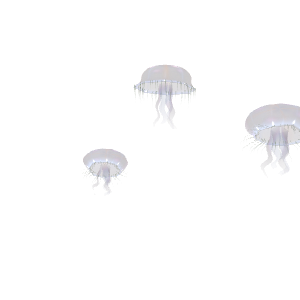
Aurelia aurita / A. coerulea · Ulmaridae
Moon Jelly (Aurelia aurita / A. coerulea) is an aquarium animal. It belongs to the Ulmaridae family. It is native to Coastal seas almost worldwide: bays, estuaries, harbours and lagoons. A. aurita is native to the north-east Atlantic; A. coerulea (most hobby stock) comes from the north-west Pacific.. Water temperature: 18°C – 24°C. pH: 8.0 – 8.4. Care difficulty: Easy.
How do you care for Moon Jelly (Aurelia)?
| Light | No special lighting needed, since it has no photosynthetic symbionts. LEDs are for display only; keep a dark period. |
|---|---|
| Temperature | 18°C – 24°C |
| pH | 8.0 – 8.4 |
| Placement | Suits a purpose-built jelly tank (kreisel, pseudokreisel, cylinder or sphere) with a smooth, cornerless, bare interior. Salinity 32-34 ppt. One species per tank; about 1.5 L of water per inch of jelly. |
| Growth | Grows fast: from ~4 mm ephyrae to display size in 2-4 months. Wild adults are roughly 10-40 cm; tank animals stay far smaller. Typical life is 6-12 months, with well-kept groups reaching 1-2+ years. |
| Difficulty | Easy (the easiest first jelly, but it needs a dedicated, fully cycled jelly system) |
| Family | Ulmaridae |
How do you trim and propagate Moon Jelly (Aurelia)?
Do matched partial water changes, siphon debris and clean screens. Feed enriched Artemia nauplii 1-3 times a day. Breeding: females brood planulae, which settle within ~48 hours as polyps; polyps bud, then strobilate into stacks of ephyrae. A temperature change, heavier feeding or a deep clean can trigger strobilation.
What problems affect Moon Jelly (Aurelia)?
Bell inverted, pitted or holed: poor flow, bubbles or bad water. Floating or sinking: salinity mismatch after a change, or trapped air. Lethargy, weak pulsing: copper or zinc contamination, or flow too strong. Pinned on the screen: flow too strong or screen too small.
How do you fix Moon Jelly (Aurelia) problems?
Lower and straighten the flow, remove bubble sources and test the water. Match salinity at water changes and acclimate slowly. Test for copper and zinc and change to clean water. Enlarge the screen area. Some pumps, probes, heat exchangers and tap water can leak zinc.
Where does Moon Jelly (Aurelia) come from?
Coastal seas almost worldwide: bays, estuaries, harbours and lagoons. A. aurita is native to the north-east Atlantic; A. coerulea (most hobby stock) comes from the north-west Pacific.
What should you know before buying Moon Jelly (Aurelia)?
Sting is mild (AZA compares it to a cold-water anemone touch tank); rare allergic reactions are possible, so wash hands after handling. Aurelia, especially A. coerulea, is a non-native species in the Mediterranean, Australia, western North America and north-west Europe: never release jellies, polyps or tank water into the sea, drains or waterways. Fine for beginners with a dedicated jelly system; not for an ordinary fish tank with filters, powerheads or air stones.
Sources
- Jellyfish (Cnidaria & Ctenophora) Care Manual, 3rd ed. (Moon Jellyfish Group, ch. 1, water quality) — Association of Zoos and Aquariums (AZA)
- Moon jellyfish care guide — Exotic Aquaculture
- Aurelia aurita — Wikipedia
- Moon jelly — Aquarium of the Pacific
- Aurelia aurita (moon jellyfish) — Animal Diversity Web, University of Michigan
- Aurelia coerulea — Wikipedia
- Aurelia coerulea invasion history — Smithsonian Environmental Research Center (NEMESIS)
- Aurelia coerulea - Asian moon jelly — VLIZ (Flanders Marine Institute)
Care details checked against these sources on 2026-10-07.
See Moon Jelly (Aurelia) in a living world
- Orbit Moon Jelly Desk Tank — aquarium
Last updated · Open the interactive 3D guide · All species care guides