Marimo Moss Ball care guide
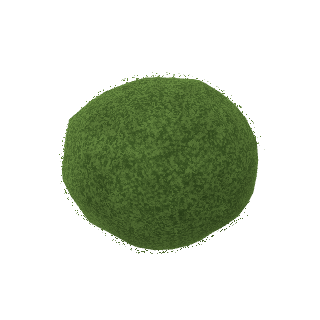
Aegagropila linnaei (syn. Aegagropila brownii) · Pithophoraceae
Marimo Moss Ball (Aegagropila linnaei (syn. Aegagropila brownii)) is an aquatic plant. It belongs to the Pithophoraceae family. It is native to Freshwater lakes of the glaciated Northern Hemisphere (northern & central Europe, Japan). Ball-forming colonies are rare: Lake Akan (Hokkaido) is now the only lake with giant balls, and Lake Mývatn's (Iceland) had nearly vanished by 2014. It needs low light. Water temperature: 15°C – 24°C (browns in water above ~28°C). pH: 6.0 – 8.5. Care difficulty: Easy. Growth rate: very slow (roughly 5mm per year).
How do you care for Marimo Moss Ball?
| Light | Low (keep out of direct sun) |
|---|---|
| CO₂ | Not required |
| Temperature | 15°C – 24°C (browns in water above ~28°C) |
| pH | 6.0 – 8.5 |
| Placement | Resting on substrate floor or nestled between rocks |
| Growth | Very Slow (roughly 5mm per year) |
| Difficulty | Easy |
| Family | Pithophoraceae |
How do you trim and propagate Marimo Moss Ball?
No pruning required. Turn it now and then so every side gets light and it stays round, and rinse it under running water occasionally to wash out debris. Propagate by tearing it into pieces — they slowly round up again, or form a carpet when tied onto stone or wood.
What problems affect Marimo Moss Ball?
Brown patches when the water is too warm (reported above ~28°C) or it gets direct sun. Tiny striped shells on or inside a ball are invasive zebra mussels, found in trade moss balls in 2021.
How do you fix Marimo Moss Ball problems?
Keep it cool and shaded and pick off brown parts. If you find zebra mussels, destroy the ball (freeze ≥24 h, boil ≥1 min, or bleach), bin it in a sealed bag, decontaminate the tank and report it.
Where does Marimo Moss Ball come from?
Freshwater lakes of the glaciated Northern Hemisphere (northern & central Europe, Japan). Ball-forming colonies are rare: Lake Akan (Hokkaido) is now the only lake with giant balls, and Lake Mývatn's (Iceland) had nearly vanished by 2014 · Biotope regions: East Asia, Europe.
What should you know before buying Marimo Moss Ball?
In March 2021 invasive zebra mussels were found in marimo balls sold in the US; by late April contaminated stock had reached 46 states. Destroy suspect balls by freezing, boiling or bleach and never put them in drains, waterways or gardens. Wild marimo is legally protected in Japan (since the 1920s) and Iceland (since 2006).
Sources
- Marimo — Wikipedia
- Notulae Algarum No. 293 (26 Sept 2023) — correct name Aegagropila brownii — Notulae Algarum
- The structure and formation of giant Marimo (Aegagropila linnaei) in Lake Akan, Japan — PMC / peer-reviewed
- Aegagropila linnaei — Tropica
- Aegagropila linnaei – Marimo — Flowgrow Aquatic Plant Database
- Invasive Zebra Mussels Found in Moss Balls — U.S. Fish & Wildlife Service
- Aegagropila linnaei — Aquasabi
Care details checked against these sources on 2026-09-23.
See Marimo Moss Ball in a living world
- Ha Long Bay Miniature — aquarium
Last updated · Open the interactive 3D guide · All species care guides