Lion's Mane Jellyfish care guide
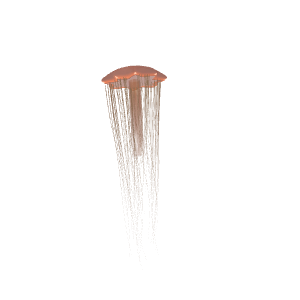
Cyanea capillata · Cyaneidae
Lion's Mane Jellyfish (Cyanea capillata) is an aquarium animal. It belongs to the Cyaneidae family. It is native to Cold boreal and Arctic waters of the North Atlantic and North Pacific (North Sea, Irish Sea, English Channel, Scandinavia); a seasonal visitor further south.. Water temperature: Cold water, chiller required (one public aquarium holds its animal at 13°C; no verified captive range exists). pH: 8.0 – 8.4. Care difficulty: Advanced, public-aquarium only.
How do you care for Lion's Mane Jellyfish?
| Light | No photosynthetic partners, so ordinary white light is enough; give a day/night cycle. The reddish-orange bell reads best under white or cool-white light. |
|---|---|
| Temperature | Cold water, chiller required (one public aquarium holds its animal at 13°C; no verified captive range exists) |
| pH | 8.0 – 8.4 |
| Placement | Large smooth cylinder or kreisel with gentle laminar flow and a chiller; one captive specimen lives in a 3,500 L cylinder. One animal per tank. Salinity about 32–35 ppt. |
| Growth | Typical bell 30–60 cm with 1.8–2.4 m tentacles; record bell about 2.1 to 3 m. The one large captive example had a bell of about 35 cm. The medusa lives about a year or less. |
| Difficulty | Advanced, public-aquarium only (harder than moon jellies, and the sting is strong) |
| Family | Cyaneidae |
How do you trim and propagate Lion's Mane Jellyfish?
Regular water changes and wall cleaning, periodic bleaching; wear gloves since loose tentacles and tools still sting. Feed zooplankton and chopped seafood, and include gelatinous prey such as moon jelly; hungry animals turn cannibalistic. Breeding: polyps multiply mainly by podocysts; warmth raises podocysts and lowers strobilation, so ephyrae come in cooler periods. Medusae live months to a year, so exhibits need continuing polyp stock.
What problems affect Lion's Mane Jellyfish?
Animals eat each other: crowding or hunger. Rapid decline of a large specimen: wrong tank shape, flow or water parameters. Tentacle tangles and damage: sticking to rough walls, screens or each other. Polyps stop budding and make cysts: culture water too warm.
How do you fix Lion's Mane Jellyfish problems?
One per tank and feed regularly. Use a cylinder or kreisel with steady gentle flow and stable cold water. Smooth surfaces and low-velocity flow. Keep polyp cultures cool and induce strobilation with a temperature drop.
Where does Lion's Mane Jellyfish come from?
Cold boreal and Arctic waters of the North Atlantic and North Pacific (North Sea, Irish Sea, English Channel, Scandinavia); a seasonal visitor further south.
What should you know before buying Lion's Mane Jellyfish?
Painful sting; the toxin acts for hours and the animal can sting even after death or when tentacles break off. Not usually fatal in healthy adults, but severe stings can cause intense pain, swelling, weakness, nausea, cramps, breathing difficulty, fast heartbeat and Irukandji-like symptoms 20–60 minutes later; seek care for large stings or breathing symptoms. Lab-model first aid: vinegar rinse (seawater increased venom delivery), then hot water about 45°C for about 40 minutes or more; ice did not help. Do not rub. Not for hobbyists, young children or anyone with severe allergies. Never release into the wild.
Sources
- Lion's mane jellyfish — Wikipedia
- Evaluation of Cyanea capillata sting management protocols using ex vivo and in vitro envenomation models — Toxins (MDPI) via PubMed Central
- Lion's mane jelly — Aquarium of the Pacific
- World's largest captive jellyfish on display — Practical Fishkeeping
- Jelly collecting — Virginia Living Museum
- Jellyfish (Cnidaria and Ctenophora) Care Manual: water quality, podocysts and safety chapters — Association of Zoos and Aquariums (AZA)
- Effects of temperature and salinity on four species of north-eastern Atlantic scyphistomae (Cnidaria: Scyphozoa) — Marine Ecology Progress Series 2016 (University of St Andrews portal)
- Gigantic jellyfish bred at Primorsky Aquarium — Primorsky Aquarium
- Lion's mane jellyfish — Oregon Coast Aquarium
Care details checked against these sources on 2026-10-07.
See Lion's Mane Jellyfish in a living world
- Lion's Mane — aquarium
Last updated · Open the interactive 3D guide · All species care guides