Box Jellyfish (Cubozoa) care guide
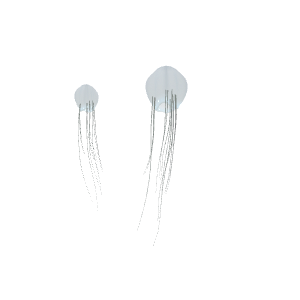
Cubozoa: Tripedalia cystophora, Carybdea marsupialis, Alatina alata (Chironex fleckeri is never kept) · Tripedaliidae / Carybdeidae / Alatinidae (Chirodropidae: Chironex)
Box Jellyfish (Cubozoa: Tripedalia cystophora, Carybdea marsupialis, Alatina alata (Chironex fleckeri is never kept)) is an aquarium animal. It belongs to the Tripedaliidae / Carybdeidae / Alatinidae (Chirodropidae: Chironex) family. It is native to Tropical and subtropical seas roughly 42°N to 42°S; dangerous species concentrated in the Indo-Pacific. Chironex fleckeri: northern Australia to Papua New Guinea, Indonesia, the Philippines, Vietnam. Tripedalia: Caribbean and Indo-Pacific mangrove lagoons.. Water temperature: 22°C – 28°C (lab practice: polyps 22°C, medusae 28°C; keep stable). pH: 8.0 – 8.4. Care difficulty: Very difficult.
How do you care for Box Jellyfish (Cubozoa)?
| Light | They hunt by sight with 24 eyes, so give a regular day/night cycle; the one lab culture used 8 h light / 16 h dark for medusae, polyps in darkness. |
|---|---|
| Temperature | 22°C – 28°C (lab practice: polyps 22°C, medusae 28°C; keep stable) |
| pH | 8.0 – 8.4 |
| Placement | Specialist laboratory or public-aquarium systems only, not a desktop tank. Tripedalia was raised in 50 L tanks (polyps) and 250 L tanks (medusae), in full-strength seawater with filtration and circulation. |
| Growth | Tripedalia: bell about 1 cm. Carybdea: about 15–40 mm. Chironex fleckeri: bell typically 16 cm, up to 35 cm, tentacles about 3 m. Wild life about 3 months; lab animals 7–8 months. |
| Difficulty | Very difficult (lab or public aquarium only; Chironex is never kept) |
| Family | Tripedaliidae / Carybdeidae / Alatinidae (Chirodropidae: Chironex) |
How do you trim and propagate Box Jellyfish (Cubozoa)?
Regular partial water changes, matching temperature and salinity; gloves and eye protection. Feed enriched Artemia nauplii daily; Carybdea takes larger prey (mysids, copepods) as it grows. Breeding: polyps do not strobilate; each polyp transforms wholesale into one small medusa, so there is no ephyra stage. In Carybdea marsupialis warming triggers it; new medusae are 1–2 mm across.
What problems affect Box Jellyfish (Cubozoa)?
Medusae die before adult size: cubozoans are hard to rear and success depends on water movement, filtration and feeding frequency. Polyps fail to bud: static, dirty water, or too little food and warmth. Keeper stung: loose tentacles, unwashed tools.
How do you fix Box Jellyfish (Cubozoa) problems?
Use circulating, filtered seawater and regular small feeds; expect high losses. Add filtration and flow, feed regularly, warm to the species' range. If stung, follow the first aid in the safety field and see a doctor for anything beyond mild local pain.
Where does Box Jellyfish (Cubozoa) come from?
Tropical and subtropical seas roughly 42°N to 42°S; dangerous species concentrated in the Indo-Pacific. Chironex fleckeri: northern Australia to Papua New Guinea, Indonesia, the Philippines, Vietnam. Tripedalia: Caribbean and Indo-Pacific mangrove lagoons.
What should you know before buying Box Jellyfish (Cubozoa)?
Severity varies sharply by species. Kept only in labs and public aquaria: Tripedalia cystophora (tiny, harmless to mild), Carybdea marsupialis, Alatina (lab polyp cultures). NEVER kept: Chironex fleckeri (the most lethal jellyfish; one animal holds venom for dozens of people, at least 64 deaths in Australia since 1884, collapse within minutes) and Irukandji-type species. Alatina stings are painful but self-limiting; Carybdea usually local burning, some cause Irukandji-like illness. First aid (DAN protocol quoted by AZA): call emergency services, be ready for CPR, do not rub, pour vinegar 30 s or more, rinse with seawater not fresh water, then hot water up to 45°C for 30-90 min, always get medical review. Vinegar is debated: Australian guidance limits it to tropical areas. Never release into the wild.
Sources
- Box jellyfish — Wikipedia
- Chironex fleckeri — Wikipedia
- Tripedalia cystophora — Wikipedia
- Cell proliferation in cubozoan jellyfish Tripedalia cystophora and Alatina moseri — Biology Open / PubMed Central
- Jellyfish (Cnidaria and Ctenophora) Care Manual: sting first aid, water quality, discharge sections — Association of Zoos and Aquariums (AZA)
- Are we using the correct first aid for jellyfish? — Medical Journal of Australia
- Cubozoa — Wikipedia
- Alatina alata — Wikipedia
- Carybdea — Wikipedia
- Effects of environmental variables on the distribution of juvenile cubomedusae Carybdea marsupialis in the coastal Western Mediterranean — PubMed Central
- Meeting abstract: housing conditions for Carybdea marsupialis culture — Society for Integrative and Comparative Biology (SICB)
Care details checked against these sources on 2026-10-07.
See Box Jellyfish (Cubozoa) in a living world
- Oceanic Box Jellyfish — aquarium
Last updated · Open the interactive 3D guide · All species care guides